
Battle Creek, MI · Garage Door Service
Deciding What's Worth Fixing on a Battle Creek Garage Door
Most Battle Creek garage doors date to the 1960s and 70s. Here's how to tell what's worth repairing on a door that old, and what the cold does to it every winter.
- Repairs & new doors
- Springs & openers
- Serving 7 nearby communities
What to Look At First
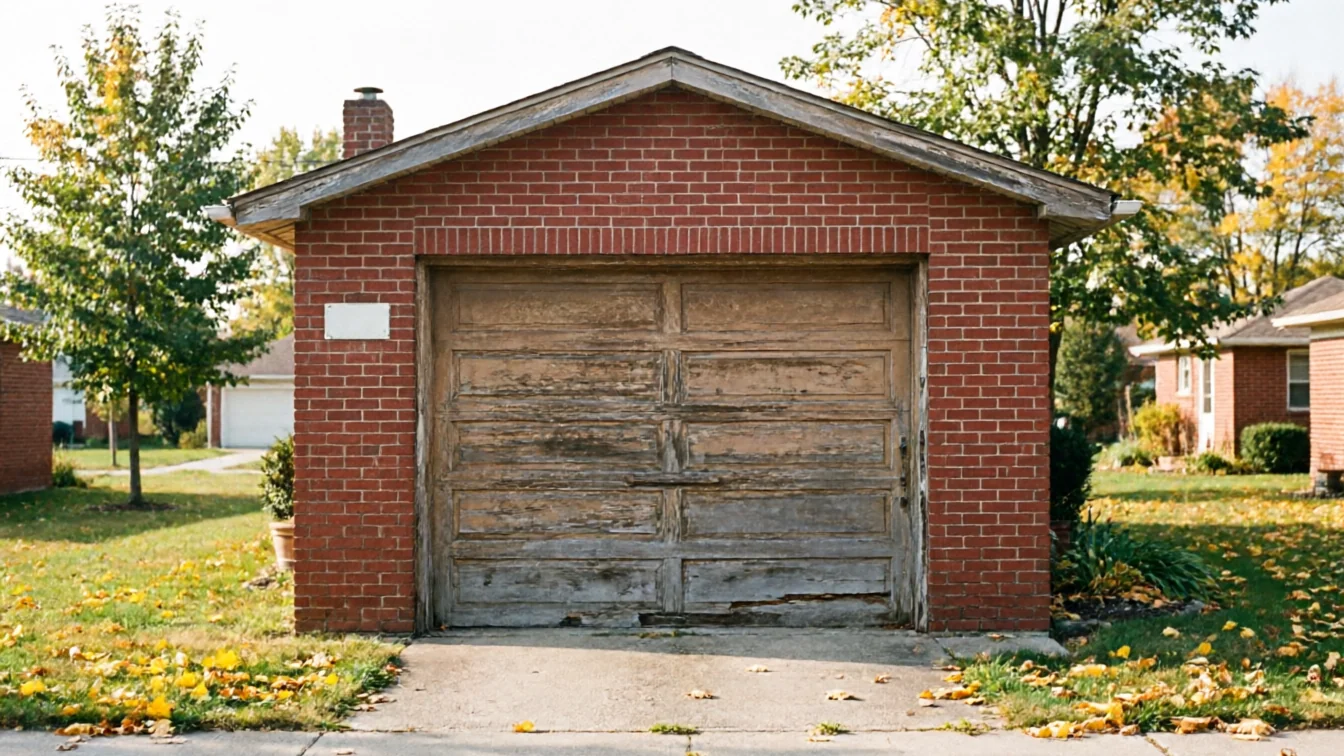
Start with the build date, even a rough one. Housing across this service area mostly went up between 1945 and 1993, with the median landing around 1968, so a lot of the doors we get called on are original or close to it. That matters because a door from that era was built on heavier steel than today's panels, with hardware sized for a different set of expectations.
Check the track first. On a door that old, the track is usually bolted, not riveted, and if it's bent you're looking at a straightforward swap, not a structural problem. Then check the spring. A torsion spring on a door this age has likely been replaced once already if the house has had any upkeep at all - if it hasn't, and it's original, it's due regardless of whether it's making noise yet.
Look at the panels themselves. Steel from the 1960s and 70s doesn't have the foam-filled insulation you'd find in a newer door, so a dent doesn't usually mean rot or rust underneath, it just means a dent. That's actually good news: a cosmetic dent in a solid-gauge panel from that era is often a non-issue, where the same dent in a thin modern panel can be a sign the skin is compromised.
One honest note here: if the bottom section has been sitting in standing water for years, or the wood jamb it's mounted to has gone soft, no amount of hardware work fixes that. That's a replacement, not a repair.
What Is Going On
A door built in 1968 was engineered for the building codes and hardware standards of that year, not this one. The spring tension, the drum size, the cable gauge - all of it was matched to a specific panel weight that often doesn't match what's gone up on badly-fit replacement panels since. We see a lot of doors across these older neighborhoods running mismatched hardware because a panel got swapped once, twenty years ago, without anyone resetting the spring for the new weight.
The other thing going on with stock this age is wear that's invisible until it isn't. A torsion spring doesn't announce its fatigue - it just lets go one morning, usually in the cold, usually on the door that hasn't been touched since whoever owned the house before you lived there. Rollers on original track are the same story: steel rollers with no nylon sleeve wear the track groove unevenly over fifty-plus years of cycles, and once that groove is worn, no amount of lubrication quiets it down.
This is also why we don't recommend blanket opener replacement on these doors without checking the door side first. A new opener bolted to tired hardware just finds the weak point faster. Fix the door, then decide if the opener needs it too.
What Local Conditions Do
This area sits in a cold-severe climate band, and that shows up in specific ways on a door this old. Steel contracts in deep cold, and on a door with decades of play already built into the track alignment, that contraction is enough to bind a roller that ran fine in October. We get a steady run of calls every year where the complaint is "it worked yesterday" and the answer is a quarter-inch of seasonal contraction finding the one worn spot in the system.
Cold also stiffens lubricant and hardens weatherstripping, which on an original 1960s-70s door often means a bottom seal that was already thin losing its last bit of flex right when you need it most. That's not a safety issue, but it is where the cold gets into the garage, and on a door that age the seal channel itself is sometimes undersized compared to what's made today, so a standard replacement seal doesn't always seat right without a channel swap too.
The spring is where cold and age compound each other hardest. A torsion spring loses a measurable amount of lift in sustained cold, and a spring that was already near the end of its cycle life from age has less margin to give. That combination is why so many spring failures on older doors around here cluster in the coldest stretch of the year, not evenly across the calendar.
Season by Season
Fall is when a door this old should get looked at, not spring. Once the cold-severe stretch sets in, tightening hardware and checking spring tension gets harder to schedule around ice and harder to do right in a cold garage. A door inspected in October, before the first real cold snap, gives you time to fix a worn roller or a tired spring before it fails on its own schedule instead of yours.
Winter is when original hardware gets tested. Steel contraction plus stiff lubricant plus a spring near the end of its life is a combination that shows up as grinding, hesitation, or a door that reverses on its own. If that happens on a door built anywhere near that 1968 median, treat it as the hardware telling you something, not just cold weather being cold weather.
Spring and summer are for addressing what winter exposed - replacing the roller that bound, the spring that lost too much lift, the seal that cracked. It's also the easier season to deal with panel dents or track realignment, since you're not fighting frozen ground or a garage at freezer temperature while you work.
We don't push full replacement on a door just because it's old. A lot of this 1960s-70s stock still has good steel in it. The honest call is usually hardware and seal work first, and replacement only when the frame or panel itself has actually failed.
Frequently asked questions
My garage door is from the 1960s - is it even worth fixing?
Usually, yes. Steel panels from that era are heavier gauge than most of what's sold today, so a dent or a worn roller doesn't mean the door is done. We only recommend replacement when the frame has rotted, the panel is structurally bent, or the hardware has been so mismatched over the years that repair would cost more than a new door.
Why does my old garage door stick only in winter?
Steel contracts in cold, and on a door with decades of wear already in the track, that contraction is enough to bind a roller that ran fine all summer. This area sits in a severe cold climate band, so that seasonal tightening is a real, repeatable pattern on older doors, not a coincidence.
Should I replace the opener on my old door?
Not before the door hardware is checked. A new opener bolted to a worn track or a tired spring just finds the weak point faster and can fail sooner than it should. Fix the spring, track, and rollers first, then decide if the opener needs attention too.
How do I know if my spring is original?
If no one in the house's history can point to a spring replacement, and the house dates to the 1960s or 70s like most of this area's stock, treat it as original. A torsion spring that old has no reliable warning before it lets go, which is why fall inspection matters more than waiting for a symptom.
Related garage door services in Battle Creek
More garage door guides
Book garage door service in Battle Creek
Call now or request a quote - tell us what the door is doing and where you are.