
Battle Creek, MI · Garage Door Service
The Noise Your Garage Door Is Making, and What It's Telling You
A guide for Battle Creek homeowners on garage door noises tied to this area's 1960s-70s housing stock and cold winters. Know what to check first.
- Repairs & new doors
- Springs & openers
- Serving 7 nearby communities
What to Look At First
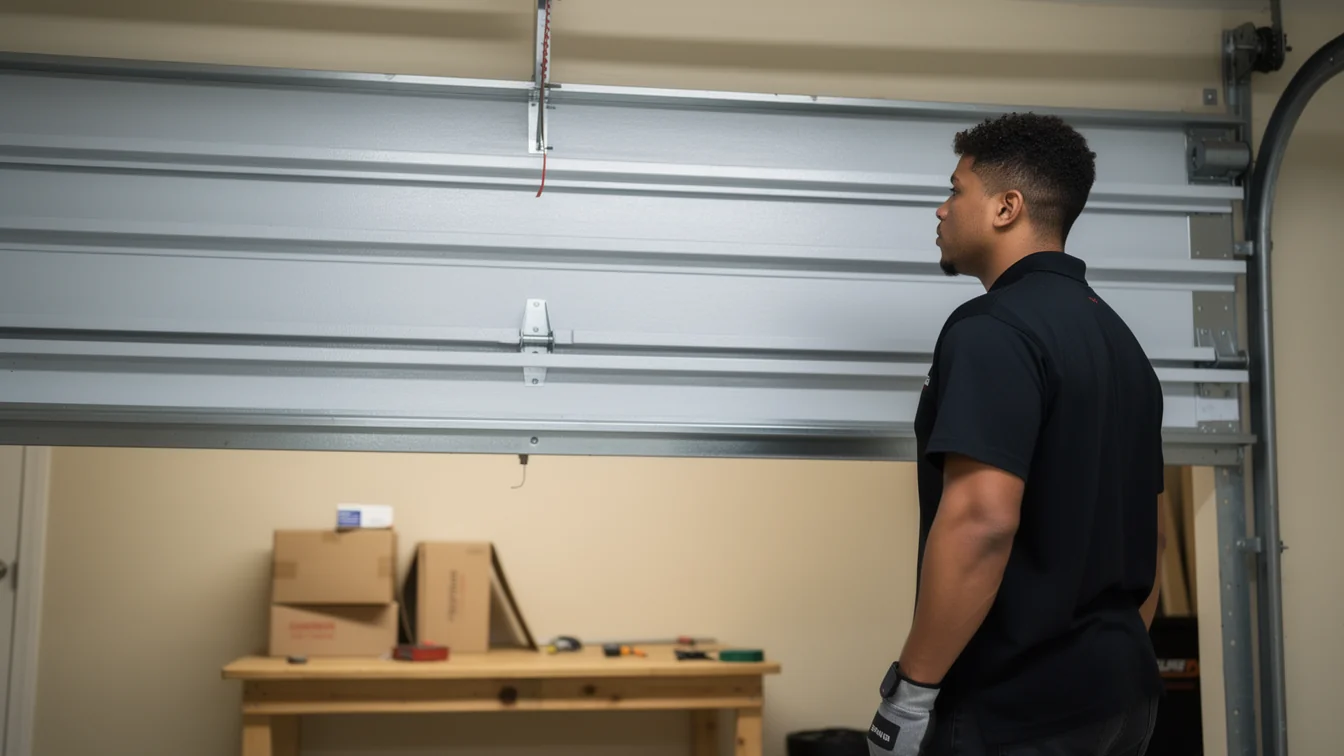
Most of the housing stock around Battle Creek went up between 1945 and 1993, with the bulk of it clustered in the 1960s and 70s across the 21 areas we work in, from Springfield and Urbandale to Galesburg and Richland. That matters because a door is only as good as the hardware it was built on, and a lot of these homes still have the original track brackets or a replacement opener bolted onto 50-year-old framing. Before you call anyone, look at three things: the track where it bolts to the header, the bottom bracket on each side of the door, and the spring itself if it's an exposed torsion unit over the door. A grinding sound usually traces back to a roller, a sharp bang to a spring, and a rhythmic thunk to a bent track section or a loose hinge between panels. Write down where on the door the sound happens and whether it's on the way up, the way down, or both. That single detail saves a lot of guessing once someone is standing in your driveway looking at it. If the door hesitates partway up and the noise gets worse right at that spot, that's a different problem than noise that's constant the whole cycle, and it's worth naming the difference before anyone touches a wrench.
What Is Going On
A door built or last serviced when this neighborhood's housing stock went in - call it 1968 give or take - was engineered for a different expectation of use and a different set of materials than what's sold today. Galvanized hardware from that era holds up fine mechanically but it wasn't zinc-coated the way current rollers and cable are, so corrosion starts from the inside of the roller stem outward, and you hear it as squeal long before you see rust on the outside. On a lot of the older one-piece and sectional doors common across these 1960s-70s builds, the track gauge is lighter than what goes in new construction, so it flexes under a stiff spring and ticks with every open and close. None of that means the door is failing. It means the noise is the hardware telling you it's operating outside its original tolerance, and that's a maintenance call, not necessarily a replacement call. The honest limitation here: if the opener motor itself is original to a house from this era, parts for it are often gone, and a repair call can turn into 'we can quiet the door but the opener needs to be swapped' - that's not an upsell, it's just what's left to work with after this many decades.
What Local Conditions Do
Battle Creek sits in a severe cold climate band, and that changes what a noise means depending on the month. Steel contracts in cold air, and on a door with the clearances typical of 1960s-70s hardware, that contraction opens up just enough play in the roller-to-track fit to turn a quiet door into a rattling one the first hard cold snap of the year. Grease that was fine in August turns stiff by December, and a stiff lubricant on an old roller stem is what produces that low groan on the first pull of the morning. None of this is damage by itself, but ignored over a few winters it wears the roller groove unevenly, and that's when a noise problem becomes a track-replacement problem. If your door went quiet-ish in summer and came back loud in the last cold stretch, that's the climate doing exactly what it does to this hardware, not a sign something broke overnight.
Season by Season
Fall is when you want to catch the hardware before the hard freeze sets in, since lubricant applied while it's still warm penetrates the roller stem better than anything applied once temperatures have already dropped. Winter is when existing wear announces itself loudest, because cold steel has less give in it and transmits vibration through the track and into the house framing more than it does in warmer months - if you're going to get a complaint from inside the house about a noisy door, it's going to be a January complaint. Spring is when condensation from the freeze-thaw cycle shows up as surface rust on the spring coils and cable, which changes the pitch of the noise from a clean squeak to something grittier. Summer is the quiet season mechanically, but it's also the best time to deal with anything you noticed over the winter, since parts lead times aren't pushed by the storm-related call volume that stacks up during a bad cold stretch. None of this is a seasonal maintenance script you could run in just any climate - it's specific to how a severe cold winter interacts with the kind of hardware this area's housing stock tends to still be running.
Frequently asked questions
My door only makes noise when it's cold out. Is that normal?
Given the cold climate here, yes, that's common. Steel hardware contracts in low temperatures, opening up small gaps in older roller-to-track fits, and stiff winter grease makes the first pull of the day louder. It's worth a lubrication check before assuming something's broken.
Is a loud door a sign I need a new opener?
Not necessarily. A lot of noise complaints trace back to rollers, track alignment, or spring wear rather than the opener motor. On houses with original 1960s-70s hardware, opener parts can be hard to source, but the noise itself usually points to the door hardware first.
Why does my door bang loudly once a cycle?
A single loud bang, usually right near the top or bottom of travel, is almost always spring-related - either a torsion spring under uneven tension or a loose spring cone. Don't keep operating the door if this is happening; call it in.
Should I just replace the whole door instead of fixing the noise?
Depends on the age and condition. If the track, hinges, and panels are original to a house from the 1960s or earlier and worn unevenly, repair can end up chasing the same problem repeatedly. We'll tell you honestly when replacement makes more financial sense than another repair call.
Related garage door services in Battle Creek
More garage door guides
Book garage door service in Battle Creek
Call now or request a quote - tell us what the door is doing and where you are.